I am nuts for the idea of Landsat and other satellite images of Earth as works of art. I wish I could afford large format, high resolution prints to hang on my wall. Here are some very nice examples from the NASA website.
Landscape Architecture, natural areas conservation and restoration, community development, geographic information systems, physiography, geomorphology, public policy and the built environment, with an emphasis on Starkville, Mississippi and its environs.
Monday, July 23, 2012
Sunday, July 22, 2012
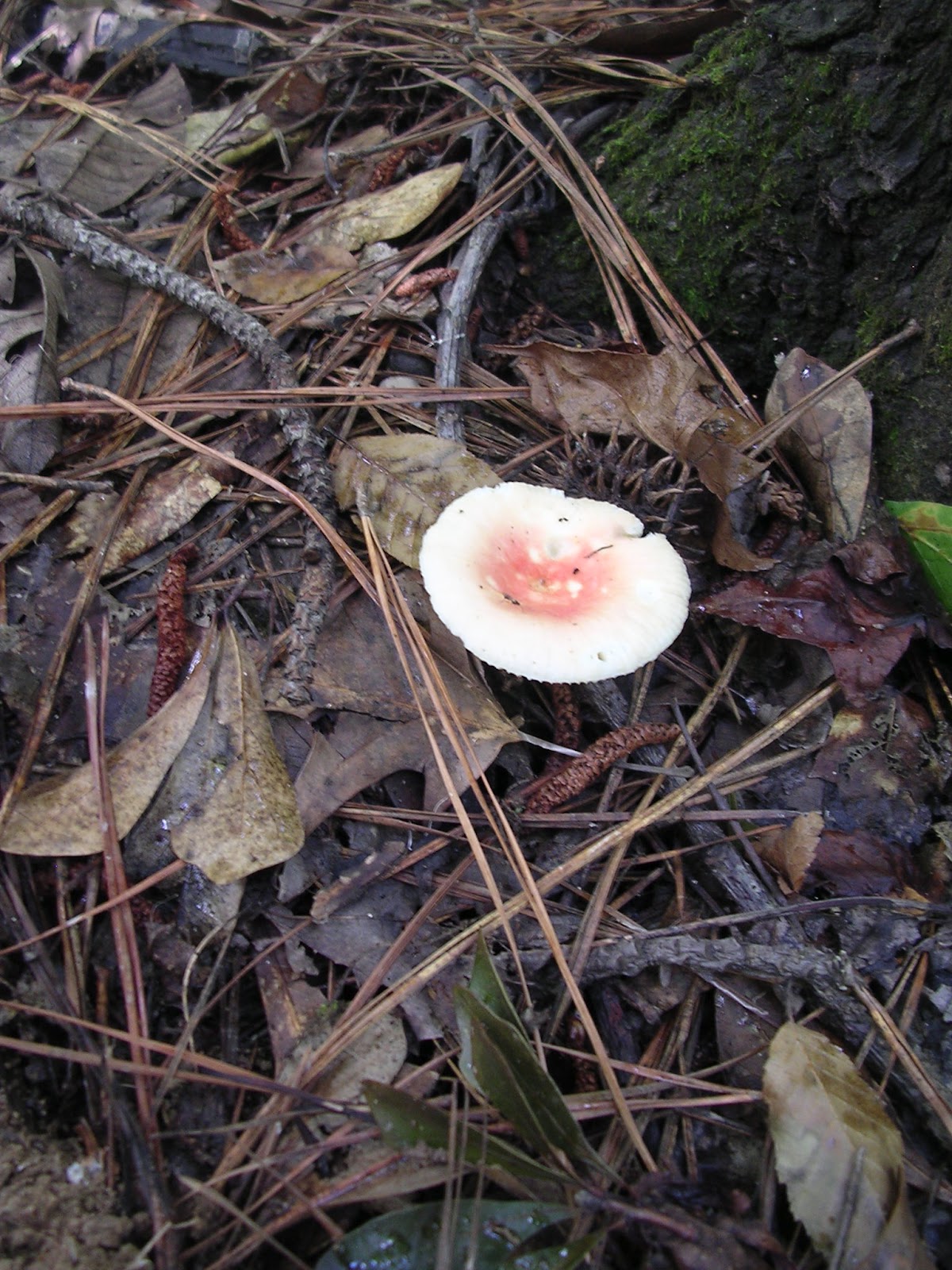
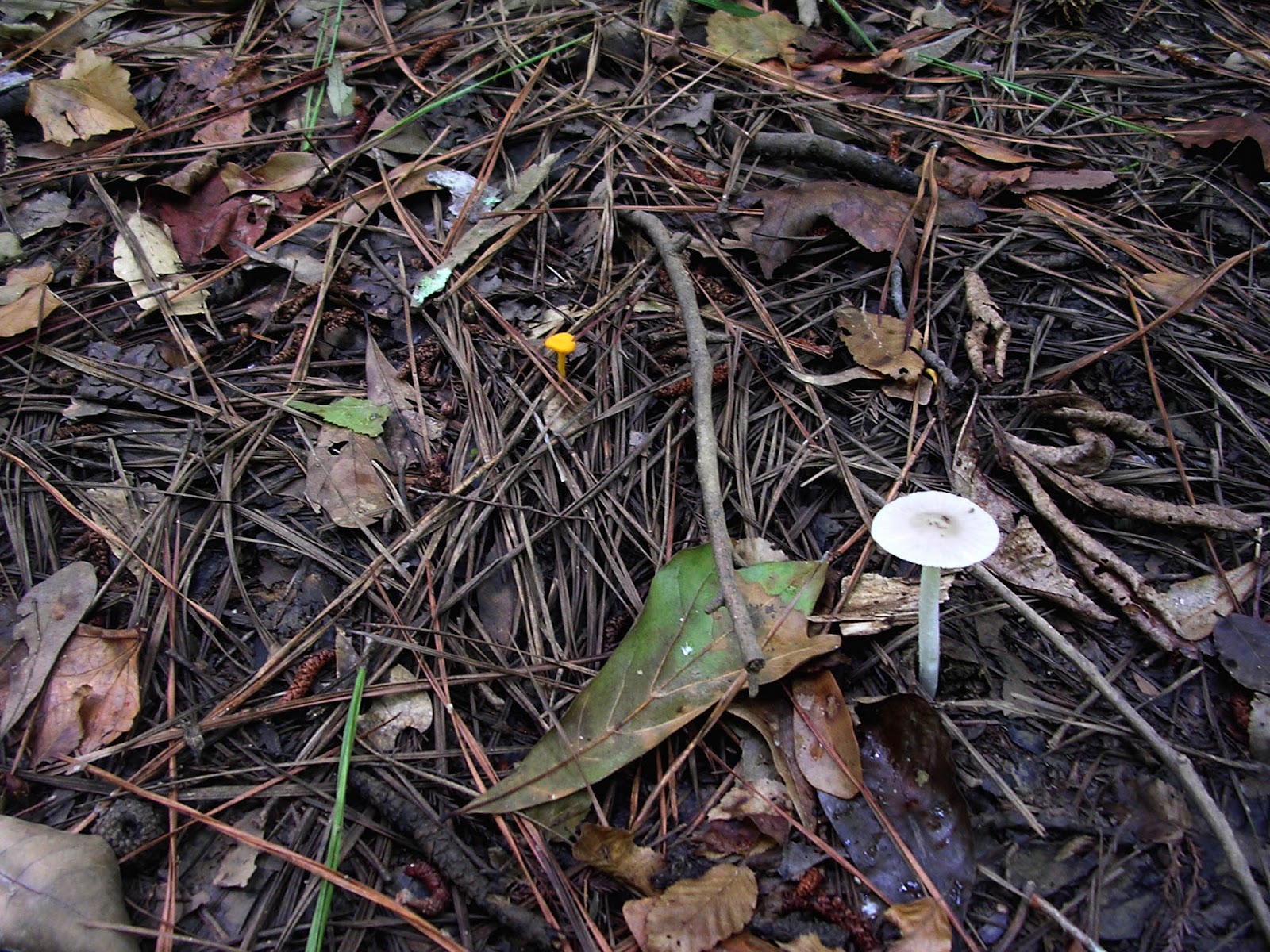
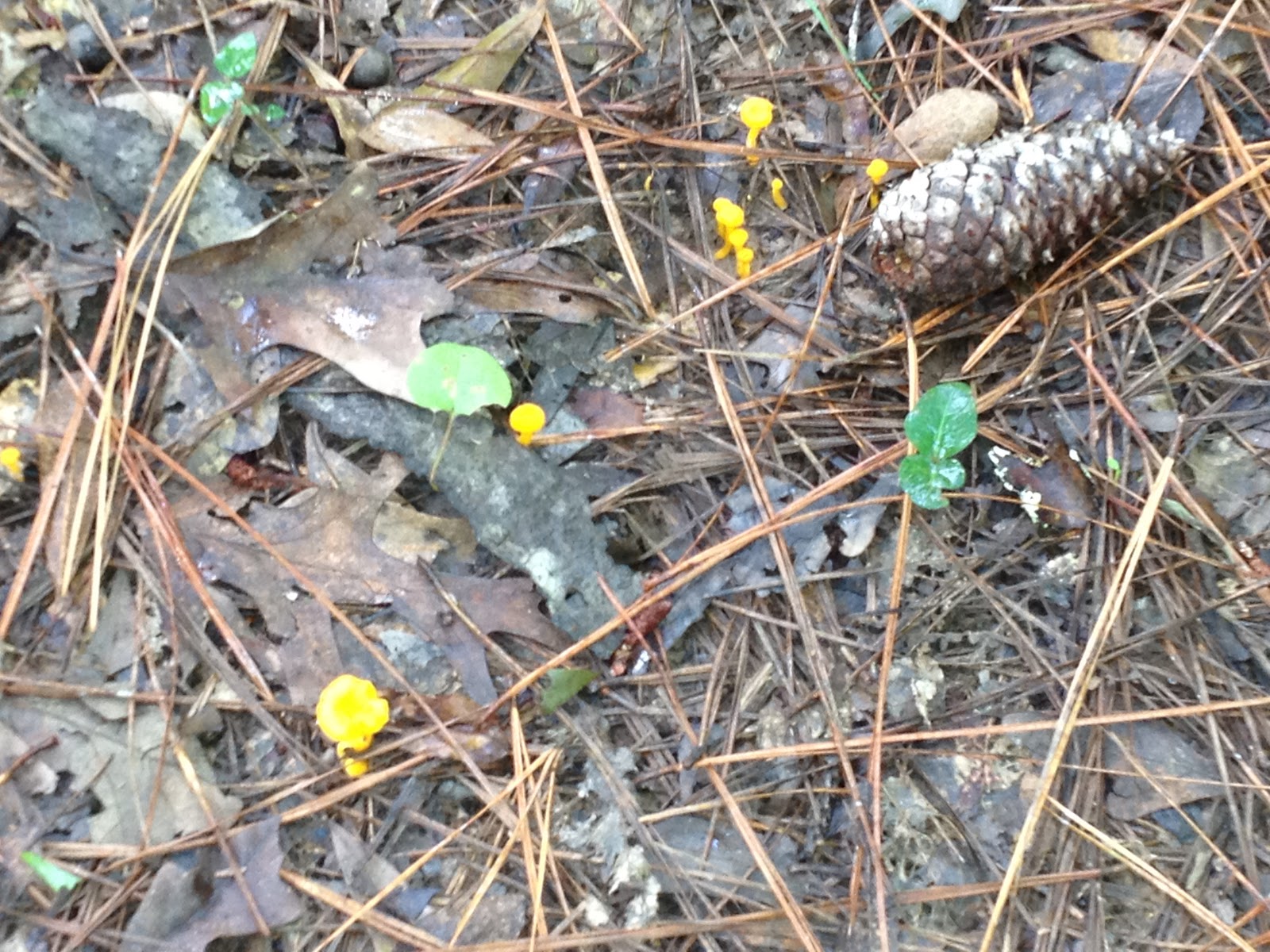
Mushrooms on Beaverdam Trail
Sally, the boys, and I and went for a Sunday morning walk on Beaverdam
Trail in the Noxubee Wildlife Refuge this morning. It was kind of magical. The canopy is fully enclosed and the what light hit the ground layer was dappled and rippling.
Since our area has experienced almost daily thunderstorms for the past three
weeks, many varieties of fungus have emerged. Within ten minutes of entering
the woods I saw four different kinds of mushrooms. I knew we were in for a
treat and tried to document each individual type. It was difficult to
consistently get good focus with a point-and-shoot Nikon and two iPhones. The
forest floor was dark in most locations where mushrooms were found. Since the camera flash tends to wash out the
colors, we had to keep turning it off, which
requires a steadier shooting hand. Here are about twenty shots of individual types that
are worth looking at. In addition to this, I have about a half a dozen that are
too blurry to share. Add to that those which were just plain decided not to photograph and we easily could have seen thirty distinct
species today. Thirty species is amazing for a two-hour meander through a half a mile of bottomland hardwood forest along Octok Creek. If you are interested in mushrooms and you live in an area that
has had a lot of rain, the time to get out into the woods is now.
As always, remember that you can click on the picture for a larger version.
To start off, here is a picture of Bluff Lake taken
today from the Bluff Lake Boardwalk. These lilypads are
interesting, but I don’t think they are a good thing for the lake.
Here are two pictures of the same section of the Bluff Lake
Boardwalk, one taken on 27 February and one taken today, 22 July. And now for
the mushrooms:
Pretty cool huh! Remember: No Child Left Inside!
Tuesday, June 19, 2012
Harrell Prairie
Last Saturday, June 16th, I visited Harrell Prairie with some people from the Mississippi Native Plant Society. Heather Sullivan, staff botanist at The Mississippi Museum of Natural Science led the group. We saw a lot of purple coneflower and yellow prairie coneflower (Ratibida). We spent a lot of time looking for a blooming eryngium yuccifolium, rattlesnake master. We found lots of individual plants, but none in bloom. Other plants seen include butterfly milkweed, mountain mint, and asters.
Ceanothus americanus New Jersey Tea
A native Lythrum, or loosestrife. This is not the invasive purple loosestrife.
Helianthus, scrubby oaks, burned oak.
This huckleberry is common at Harrell Prairie. The others said is was good to eat and lamented that it is not yet ripe.
This aster was spotted several times.
One of the few blooming Rattlesnake Master plants. All in all we were on the prairie for a little over two hours with a group of about thirty people, all ages. Temperatures rose into the low nineties and most of the group decided to call it a day. But a few hard-core prairie enthusiasts, including my friend from the MSU Landscape Architecture graduate program Rob Anders, southern gardener and "certifiable plant fool" Gail Barton, and an avid gardener from Vicksburg named Jennifer, decided to tour some of the recently restored prairie remnants in the Bienville National Forest. Here is a large one on Morton-Marathon Road:
At this prairie we were serenaded by some large and noisy hawks overhead. We were impressed with how intact and diverse this patch is. In the very midst of it, Gail flushed a turkey. She had been sitting on nine eggs in the shade of a small persimmon tree. We spent a good long hour here, then walked around another large patch on Walk Hill Road. We told stories related to our experiences in the green industry, landscaping, gardening and botanizing. It was a great day.
Wednesday, June 6, 2012
New Hanover County to Hire "Sandman"
A permanent, county-level position to oversee an endless series of temporary fixes. Read it here.
I am enjoying a relaxing week on the North Carolina coast. This was on the front page of the local paper my brother-in-law just brought over from the Beach Pantry.
Wednesday, May 30, 2012
Wildflowers at Choctaw Lake
Every two months or so my family joins a few friends with kids to walk around Choctaw Lake in the Tombigbee National Forest (near Ackerman, in Choctaw County, about twenty minutes west of Starkville). The above photo was taken last October. Even though I probably pushed the saturation up a little too much (it was a very sunny day and the photos were pretty washed out color-wise), you can see that the pine forest behind the bench was recently burned. Judgin by the open character of the woods understory, it appears to me that most of the area around Choctaw Lake is burned on a regular basis.
This is another shot from last fall. Black-eyed Susans growing lakeside under an oak.
This panorama shows a moisture gradient expressed in plant strata. Grasses and sedges at the water margin, tag alders above that, maples and other hardwoods (gums?) above that, with pines on the drier areas upslope. The late Ed Blake taught me to see this.
This is the boardwalk through the tag alder grove that you see in the panorama above. A small girl from our group poses at the vanishing point. All of the above photos were taken in October of 2011.
These next photos were taken this past April. The Tombigbee is in the North Central Hills physiographic region. Starkville is more of a flatwoods kind of system, with patches of Blackland Prairie chalk outcrops. A greater variety of spring ephemerals can be found in the hills than in the flatwoods. At least that's what David Evans in the Forestry Department told me. I think the fire regime helps. Anyway, most of what follows has not been seen by me in Oktibbeha County (yet).
This Indian Pink, Spigelia marilandica, I might never have identified if it weren't for the book Wildflower Watch by Margaret Gratz. The only reason I have this book is because I happened to be in the Barnes and Noble Bookstore on campus one day when Mrs. Gratz was signing copies. I got into a conversation with her about local wildflowers. Looking through the book, I noticed that most of the flowers were pretty common and were probably covered in my other books. Also, I thought her descriptions of the flowers was a little corny. But she was sitting right there, and she was such a nice, charming person, and I did indeed feel that I should have a book with a local perspective, so I bought it. Back in my home state of North Carolina, many botany freaks and nature lovers like myself consider Wildflowers of North Carolina, by William Justice, C. Ritchie Bell and Anne H. Lindsey, to be one of the greatest books ever written. But this Indian Pink is not in Wildflowers of North Carolina. Nor is it in the two wildflower books I always bring with me into the field, and which have never let me down (until now): the Peterson Field Guide to Wildflowers of Northeastern/Northcentral America and Newcomb's Wildflower Guide. So Thank You Margaret Gratz!
Jack-in-the-Pulpit, Arisaema triphyllum, is in just about every wildflower book and I was very happy to see it out at Choctaw Lake.
Finding these trilliums was also a treat. Justice, Bell, and Lindsey list nine species of trillium in their North Carolina book. Gratz only mentions the species cuneatum, which I am pretty sure is what we have here.
Gratz writes that this Coreopsis tinctoria, or Garden Coreopsis, is an escaped introduction from the western United States. Dozens of other coreopsis species are mentioned in my reference books, but, outside of Gratz, the only book to include tinctoria is Peterson's. Peterson confirms that this is an escape from the Manitoba/Minnesota west area.
Each of my four wildflower books is organized differently, and the organization reflects each writer's understanding of how to observe and understand wildflowers. Peterson's, probably the most popular, goes for what the general user is most likely to notice first: color. The problem with color is that there are many gradations of hue, especially from red to pink, or red to purple. I have found Newcomb's to be the most useful in the field when it comes to identifying wildflowers. It is based on keys that organize flowers based on the number of petals, then break them out in terms of opposite or alternate leaves, basal leaves or not, and other features. Gratz organizes her flowers temporally -by season- so if you are looking for a particular flower you first navigate to the approximate season then start flipping pages. Flipping pages is something you get used to with Justice, Bell and Lindsey as well, since it is arranged by the rather specialized rubric of taxonomy, or plant families. I have had the Justice, Bell and Lindsey book close at hand for a very long time, and in my early, youthful attempts to learn about wildflowers their organization would frustrate me. Over time, I got to enjoy the necessity of flipping pages, meeting new characters in the understory drama, and developing a vague appreciation for how taxonomy works.
This is another shot from last fall. Black-eyed Susans growing lakeside under an oak.
This panorama shows a moisture gradient expressed in plant strata. Grasses and sedges at the water margin, tag alders above that, maples and other hardwoods (gums?) above that, with pines on the drier areas upslope. The late Ed Blake taught me to see this.
This is the boardwalk through the tag alder grove that you see in the panorama above. A small girl from our group poses at the vanishing point. All of the above photos were taken in October of 2011.
These next photos were taken this past April. The Tombigbee is in the North Central Hills physiographic region. Starkville is more of a flatwoods kind of system, with patches of Blackland Prairie chalk outcrops. A greater variety of spring ephemerals can be found in the hills than in the flatwoods. At least that's what David Evans in the Forestry Department told me. I think the fire regime helps. Anyway, most of what follows has not been seen by me in Oktibbeha County (yet).
This Indian Pink, Spigelia marilandica, I might never have identified if it weren't for the book Wildflower Watch by Margaret Gratz. The only reason I have this book is because I happened to be in the Barnes and Noble Bookstore on campus one day when Mrs. Gratz was signing copies. I got into a conversation with her about local wildflowers. Looking through the book, I noticed that most of the flowers were pretty common and were probably covered in my other books. Also, I thought her descriptions of the flowers was a little corny. But she was sitting right there, and she was such a nice, charming person, and I did indeed feel that I should have a book with a local perspective, so I bought it. Back in my home state of North Carolina, many botany freaks and nature lovers like myself consider Wildflowers of North Carolina, by William Justice, C. Ritchie Bell and Anne H. Lindsey, to be one of the greatest books ever written. But this Indian Pink is not in Wildflowers of North Carolina. Nor is it in the two wildflower books I always bring with me into the field, and which have never let me down (until now): the Peterson Field Guide to Wildflowers of Northeastern/Northcentral America and Newcomb's Wildflower Guide. So Thank You Margaret Gratz!
Jack-in-the-Pulpit, Arisaema triphyllum, is in just about every wildflower book and I was very happy to see it out at Choctaw Lake.
Finding these trilliums was also a treat. Justice, Bell, and Lindsey list nine species of trillium in their North Carolina book. Gratz only mentions the species cuneatum, which I am pretty sure is what we have here.
Gratz writes that this Coreopsis tinctoria, or Garden Coreopsis, is an escaped introduction from the western United States. Dozens of other coreopsis species are mentioned in my reference books, but, outside of Gratz, the only book to include tinctoria is Peterson's. Peterson confirms that this is an escape from the Manitoba/Minnesota west area.
Each of my four wildflower books is organized differently, and the organization reflects each writer's understanding of how to observe and understand wildflowers. Peterson's, probably the most popular, goes for what the general user is most likely to notice first: color. The problem with color is that there are many gradations of hue, especially from red to pink, or red to purple. I have found Newcomb's to be the most useful in the field when it comes to identifying wildflowers. It is based on keys that organize flowers based on the number of petals, then break them out in terms of opposite or alternate leaves, basal leaves or not, and other features. Gratz organizes her flowers temporally -by season- so if you are looking for a particular flower you first navigate to the approximate season then start flipping pages. Flipping pages is something you get used to with Justice, Bell and Lindsey as well, since it is arranged by the rather specialized rubric of taxonomy, or plant families. I have had the Justice, Bell and Lindsey book close at hand for a very long time, and in my early, youthful attempts to learn about wildflowers their organization would frustrate me. Over time, I got to enjoy the necessity of flipping pages, meeting new characters in the understory drama, and developing a vague appreciation for how taxonomy works.
Subscribe to:
Posts (Atom)